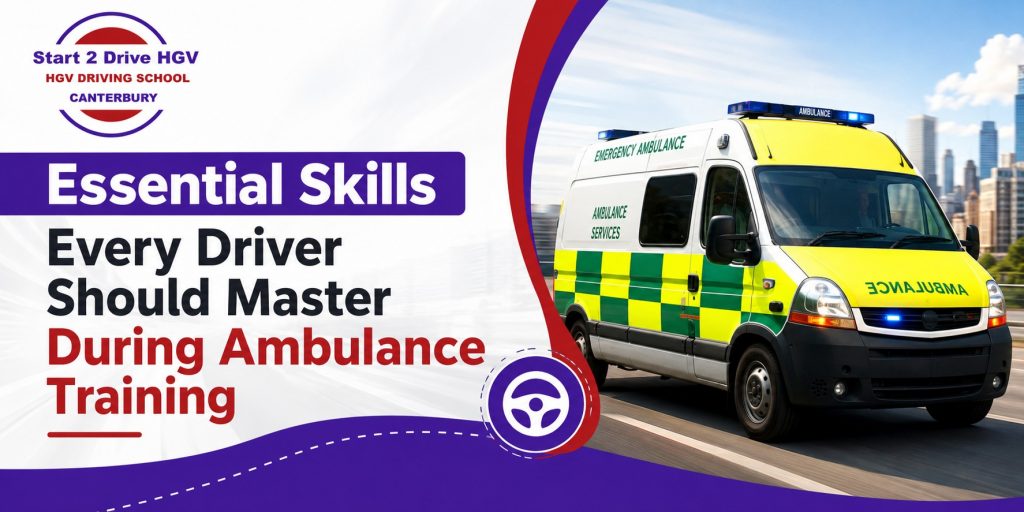
Summary: Drivers can learn several skills during ambulance training. They can learn about defensive driving and safe patient transportation techniques. Drivers can also master communication and teamwork.
————————————————————————-
Have you wondered what it takes to become a confident ambulance driver? Driving an ambulance is about much more than reaching a destination quickly. Every decision behind the wheel can affect the safety of patients, medical crews, and other road users. That is why ambulance driver training focuses on developing practical skills that prepare drivers for real-life emergencies. From handling busy roads to communicating with healthcare professionals, the training helps drivers stay calm, make informed decisions, and deliver patients safely.
Top Skills Drivers Learn During Ambulance Training
Defensive Driving and Hazard Awareness
One of the most important skills you can learn during the training is defensive driving. Ambulance drivers often travel through unpredictable weather, heavy traffic, and challenging road conditions. Simply driving fast is never the goal. When you join an HGV driving school, you are trained to anticipate potential hazards and react safely before they become serious problems. This includes maintaining safe distances from other vehicles, identifying risks at junctions, roundabouts, and pedestrian crossings.
Safe Patient Transportation Techniques
An ambulance is not just another vehicle; it is a mobile healthcare environment. During a training, you learn how your driving style affects patients’ comfort and medical treatment. Controlled braking, smooth acceleration, and careful cornering help prevent unnecessary movement inside the ambulance. A steady driving approach also helps paramedics to perform essential treatments more effectively when the vehicle is moving.
Communication and Teamwork
Effective ambulance services rely on excellent teamwork. During your ambulance training, you develop communication skills that help you work efficiently with paramedics, dispatch teams, hospital staff, and emergency responders. You learn how to receive and conform to dispatch information, provide updates during transport, and coordinate arrival times with medical teams. Clear communication helps prevent misunderstandings and helps emergency personnel prepare for incoming patients before the ambulance reaches the hospital.
Vehicle Inspection and Emergency Preparedness
A well-maintained ambulance is essential for reliable emergency services. Driving training includes comprehensive instruction on vehicle inspections and emergency preparedness. You are trained to carry out routine safety checks before every shift. These inspections include checking tyres, brakes, lights, fluid levels, and communication equipment. When you can identify mechanical issues early, you can reduce the risks of breakdowns during emergency calls. Training also prepares you to respond confidently if unexpected situations arise on the road.
We hope this blog is helpful. However, if you want to know more about our services, feel free to get in touch with us.